Major events in Budziszewko after 1945
This article presents the most important events in the history of Budziszewko after 1945, highlighting the social, economic, and infrastructural changes in the village. It describes the postwar return of Polish farmers to the land, the takeover of abandoned estates left by the Germans, and the settlement of the village by displaced persons from the Borderlands and Galicia. The author discusses the difficult beginnings of farming, related to the lack of equipment and livestock, and the unfavorable state policy towards private property, as well as the role of local craftsmen, especially blacksmiths and wheelwrights. The period of collectivization, the establishment of the Agricultural Production Cooperative and the State Agricultural Farm, and their impact on the lives of the residents, are prominently featured. The text also describes the development of the Agricultural Circle and the Rural Housewives' Circle, their activities, leaders, and organizational changes, up to the present day.
Reconstruction of the village after World War II
In January 1945, local Germans hastily abandoned their farms, along with Polish troops, to avoid the approaching Soviet front and head towards the Third Reich. On January 23, 1945, Rogoźno and the surrounding towns were liberated. Poles displaced by the Germans returned to their farms, and some who had worked on farms run by fleeing Germans during the occupation took over the properties and began farming. Between 1945 and 1947, some of the farms were resettled by Poles resettled from the so-called Eastern Borderlands.
After the end of World War II, borders shifted, and a significant portion of the country remained outside Poland. The State Repatriation Office was responsible for organizing and relocating families who found themselves outside their homeland. This office allocated farms to be settled by the newly relocated farmers. Families from so-called Galicia also relocated. Taking over the farms did not guarantee a smooth farming experience. Difficulties arose from a lack of agricultural equipment, dilapidated machinery, a lack of horses for draft power, a small number of livestock, and a shortage of labor. Difficulties were also caused by state policy, which treated private property unfavorably. Rebuilding the livestock herd took several, even a dozen, years. Farming equipment – basic machines and tools – was repaired by the farmers themselves or by craftsmen, primarily blacksmiths and wheelwrights.
In Budziszewko, Mr. Józef Witkowski ran a forge from the early post-war years until the mid-1970s. In the early 1960s, Mr. Mieczysław Krupiński established a second blacksmith shop. This shop is run by his successors to this day. It has been expanded with additional machinery and tools and serves other functions, including tractor and machinery repairs. Meanwhile, wheelwright Mr. Teofil Cieślak was responsible for the production and repair of wooden items, particularly horse-drawn carts.
Gallery
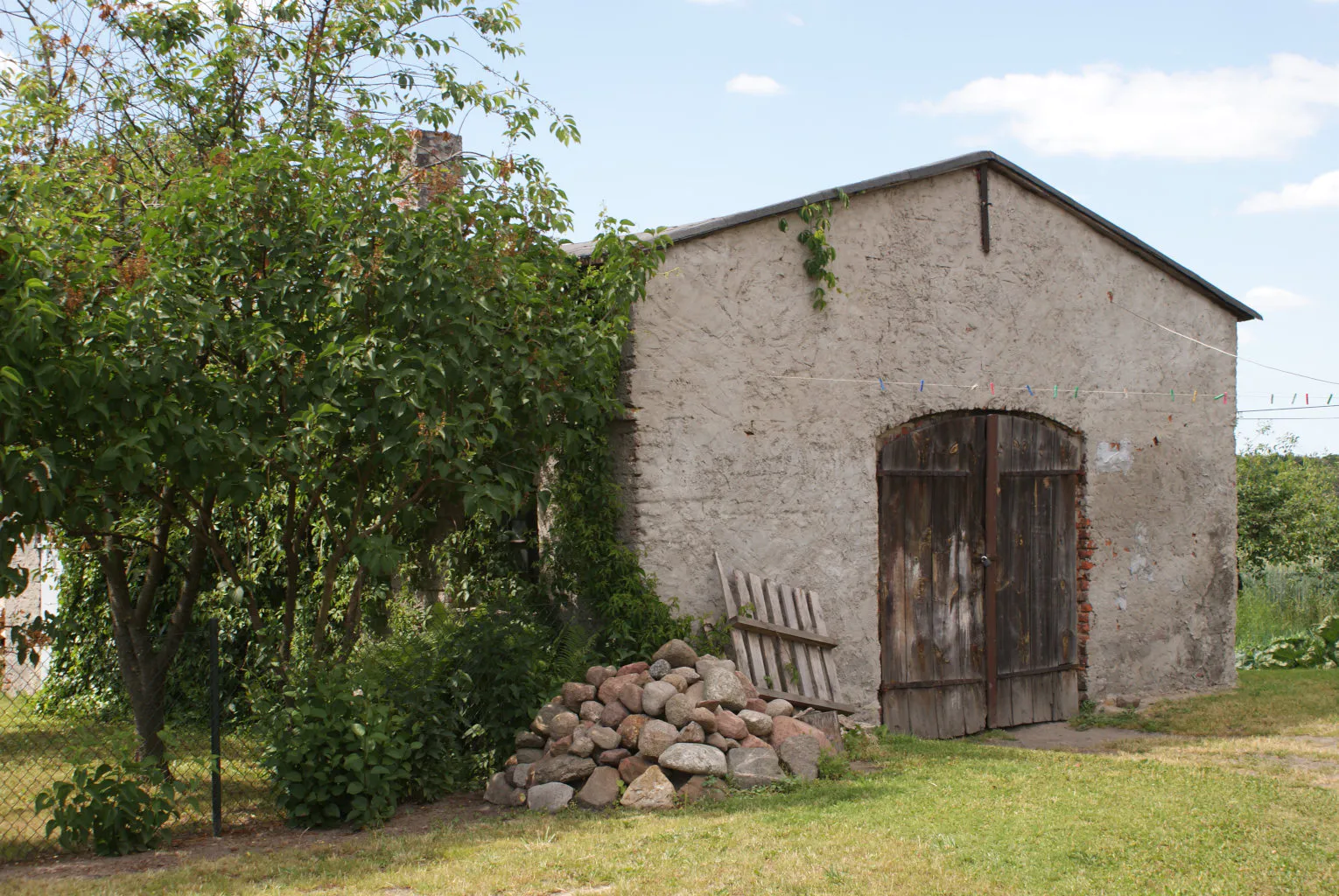
Budynek byłej kuźni
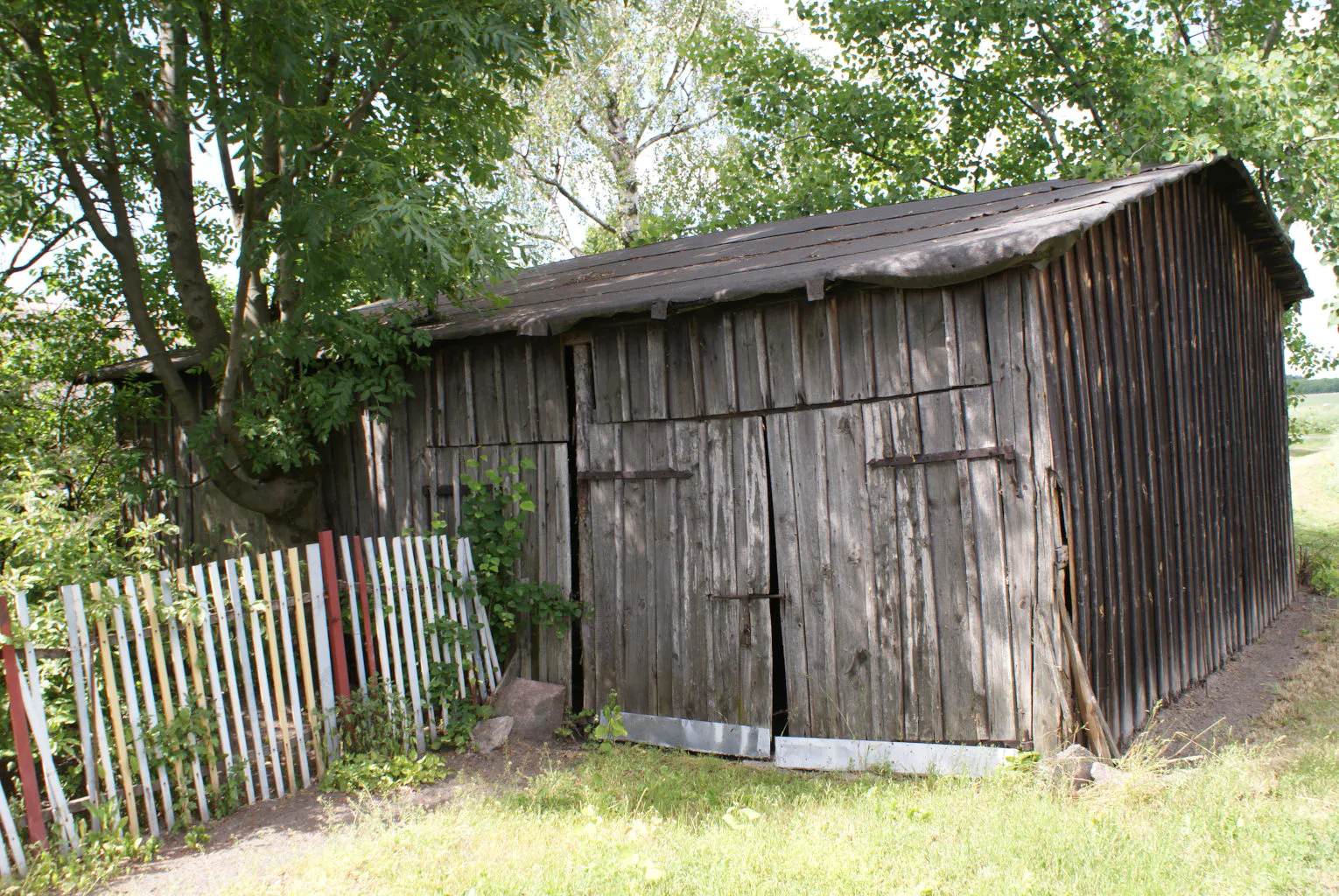
Budynek w którym był warsztat kołodzieja (stelmacha)
Click an image to zoom
Collectivization and transformation of agriculture (1949–1989)
In 1949, the government initiated so-called collectivization, which involved organizing farmers (or peasants) into agricultural production cooperatives. In 1951, mandatory deliveries of grain and potatoes were introduced, and later also milk and meat. Each farm was required to produce and deliver a specified amount of raw materials and livestock within a timeframe established by the state.
The collectivization of the village also contributed to changes in Budziszewko. In the early 1950s, at the initiative of several farmers, an Agricultural Production Cooperative was established in the village. It was founded by farmers who were not particularly hardworking and thrifty, under pressure from the authorities. However, this cooperative's operations were short-lived and disbanded. In 1953, a State Agricultural Farm was established and operated until 1989.
At the beginning of its operation, between 1955 and 1957, two barns, outbuildings, and two two-family homes for employees were built. Later, in 1967, a large (for the time) beef cattle building was constructed, housing 300 head of cattle. In 1970, a two-story, eight-family apartment building was constructed to attract employees. Within a short period, the building was occupied by families arriving from other towns.
The state farm (PGR) managed and operated a distillery producing spirit from potatoes and grain. The residue from production, known as decoction, was used as feed for the cattle. It should be added that the decoction was also used by individual farmers, who sold potatoes and grain to the distillery under contract agreements.
Gallery
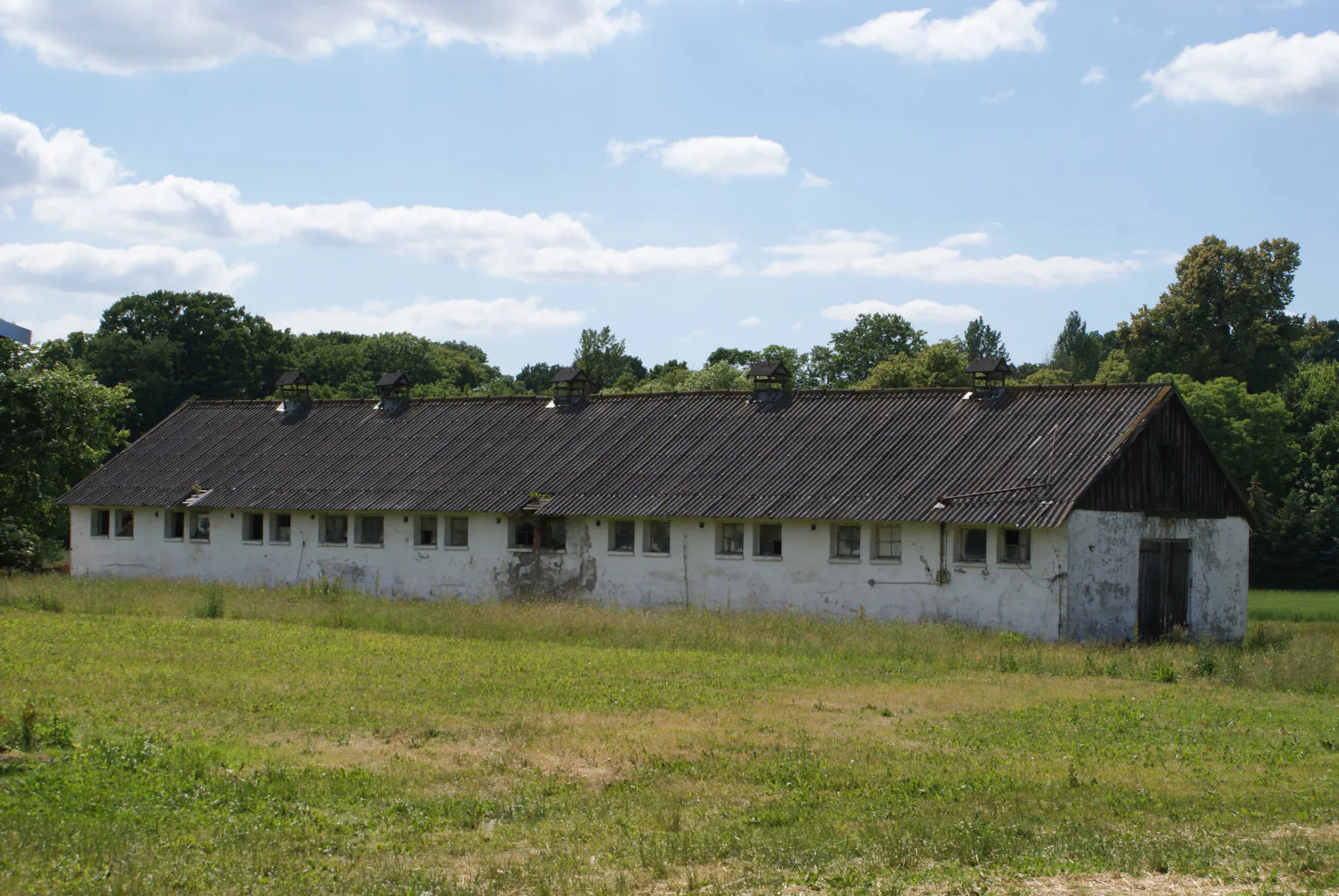
Budynek obory po państwowym gospodarstwie rolnym
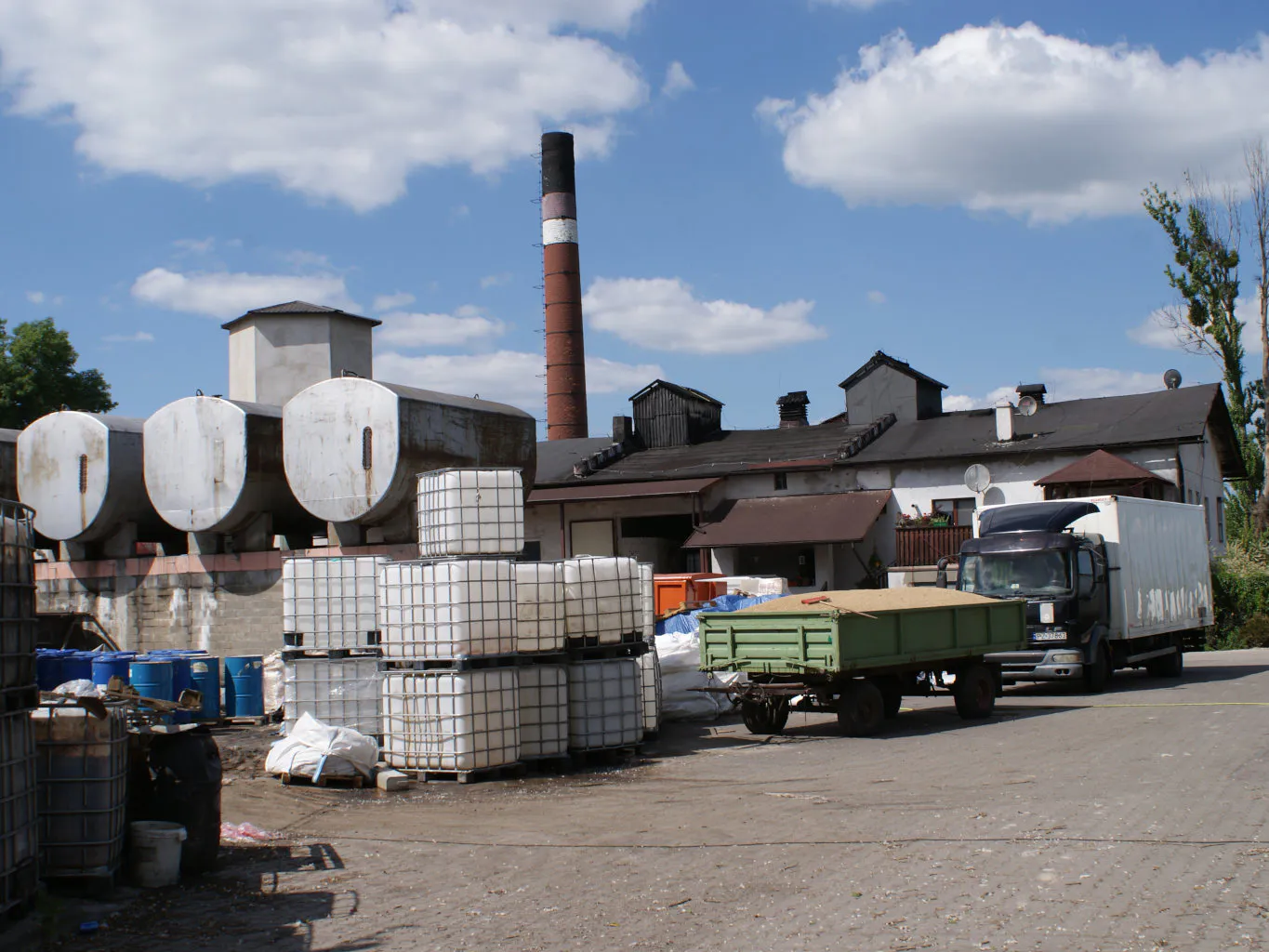
Budynek gorzelni
Click an image to zoom
The rebirth of agricultural organizations and women's groups
In 1989, as a result of political transformations in Poland, the State Agricultural Farm was liquidated. The apartments were purchased by the residents. A large building, a barn, was purchased by a private individual and modernized into a broiler house, while the remaining buildings were abandoned and fell into disrepair.
Individual farmers who survived unfavorable economic conditions banded together to run their farms in cooperation. This mutual assistance was informal, although agricultural circles uniting farmers had existed as early as the 1870s and during the interwar period. Even after the war (and even as early as 1944), it was still formally possible to associate in agricultural circles united in the Peasant Self-Help Union, but it wasn't until 1956 that these organizations began to revive.
In Budziszewko, in the late 1950s, several farmers, led by Mr. Marian Rymarski, acquired a threshing machine with a combustion engine. This marked the beginning of the Budziszewko Agricultural Circle. Initially, a few farmers were members, but later most joined. The first president was Mr. Tadeusz Ryczek, followed by Mr. Ireneusz Kubisz.
The Agricultural Circle acquired mechanized agricultural equipment necessary for cultivation and livestock production. The beginnings were difficult. The Circle owned a large grinder, a thresher, and one Ursus C325 tractor. Ultimately, it acquired 13 tractors, including several more powerful models with agricultural implements such as plows, harrows, cultivators, rotary tillers, grain and fertilizer seeders, loaders, etc., as well as trailers, binders, mowers, threshers, combine harvesters, and straw balers.
The gradual introduction of mechanization replaced horse and human labor, made work easier, and systematically reduced the number of people employed on farms. In the early years of operation, it was difficult to obtain licensed drivers. Services were provided for a fee, but prices for members were slightly lower. The acquired equipment was allocated by the state through the Central Union of Agricultural Circles and purchased with funds collected in the Agricultural Development Fund. This fund was created from the difference between the prices for mandatory deliveries imposed on farmers and market prices. The difference between the two was quite significant.
As the group acquired more equipment, it began providing services outside of agriculture, particularly in transportation. After a turbulent boom in the 1970s, the groups were merged into Inter-Cluster Machine Bases, which were in turn transformed into Agricultural Circle Cooperatives.
Agricultural circles brought together farmers, who were mostly men. Women, however, united in rural women's circles. A rural women's circle was also established in Budziszewko. Initial activities were likely conducted as informal initiatives under the leadership of Monika Cieślak and Joanna Sokołowska. Available records indicate that from 1974, the chairperson of the rural women's circle in Budziszewko was Pelagia Frachanowska, followed by Genowefa Rymarska and Grażyna Kożuszkiewicz. In 2017, the circle ceased its activities and was disbanded. After a change in regulations in 2018, rural women's circles could constitute legally recognized entities, able to obtain external funding. In 2019, a new rural women's circle, "Ekobabki," was established. Justyna Ptaszyńska became its chairperson.
The circles' activities included assistance in organizing farm work, handling collective orders, and organizing cultural activities. This included organizing training sessions in cooking, baking, and sewing, health talks, ordering chicks for home poultry, and so on. Cultural initiatives included Children's Day, Women's Day, and village games. These were often joint activities of the women's circle and the agricultural circle.
Infrastructure and rural development
In 1963–1964, the village was electrified. In December 1964, the first electric lights were turned on for the holidays. Budziszewko was one of the last electrified villages in the Obornicki County.
In the early 1970s, the Municipal Cooperative in Rogoźno built a shop. Until the new building opened, GS sold its goods in a leased space in the Wilkowski family home. A Farmers' Club was established in the space where the shop was relocated.
In 1979, a tornado swept through Budziszewko. The storm caused significant damage to farm buildings, particularly roofs that were torn off or damaged. Approximately 20 linden trees along the road to Studzieniec were uprooted, along with approximately 40 various ancient trees in the park.
In 1979–1980, land improvement projects were carried out in Budziszewko. These included clearing ditches and installing a drainage network in the soil. No dams were built to retain water during the project. During this period, the Farmers' Club was relocated to the palace.
In 1980, the paved road between Budziszewko and Studzieniec was carpeted, and in the following years, it was widened and covered with another layer of asphalt. That year, the milk collection point operated by the Rogoźno Dairy Cooperative was also closed. The collection point purchased milk from farmers with a few to a dozen cows at the time. Construction also began on a village community center and fire station between the palace and the pond (currently private property). Excavations were then carried out and the foundations were poured. Work was interrupted and construction halted due to a decision by the Voivodeship Office.
The early 1990s brought Budziszewko closer to the outside world with the village's telephony system. Many residents gained 24-hour landline service. In 1990, the distillery was also privatized.
In 1993, the village received a water supply system. A community committee was formed to build the system. All interested parties contributed money, which supported the municipality in implementing the project. This initiative helped solve the problem of a lack of water necessary for animal husbandry.
In 1994, the commune sold the palace in Budziszewko to a private buyer.
In 1999–2000, the Chestnut Road from the cross towards Owczagłowy was paved. The investment was funded by the municipal and district authorities, with significant involvement from local residents.
The fire station was built between 2001 and 2003. The finishing work was done by firemen who were also involved in the construction.
In 2006, the commune sold the village ponds to a private person.
In 2007, a sidewalk was laid along the road from the cross to the intersection. That same year, a carpet was also laid on the previously gravel-paved road towards Budziszewice.
In 2007–2008, the parking lot in front of the church was paved and sidewalks were laid in the cemetery using materials obtained from the District Roads Authority.
In 2008, the withered "Mickiewicz Oak" was cut down in the park. A few years earlier, an attempt was made to save the tree by cutting down the dry branches. The "Mickiewicz Oak" is a tree growing in the park that has some connection with Adam Mickiewicz's stay in Budziszewko. It has been heard that this tree was supposedly planted by Mickiewicz.
Between 2008 and 2010, the Budziszewko post office was gradually closed. First, its opening hours were limited, then it was turned into an agency, and finally it was closed completely.
Gallery
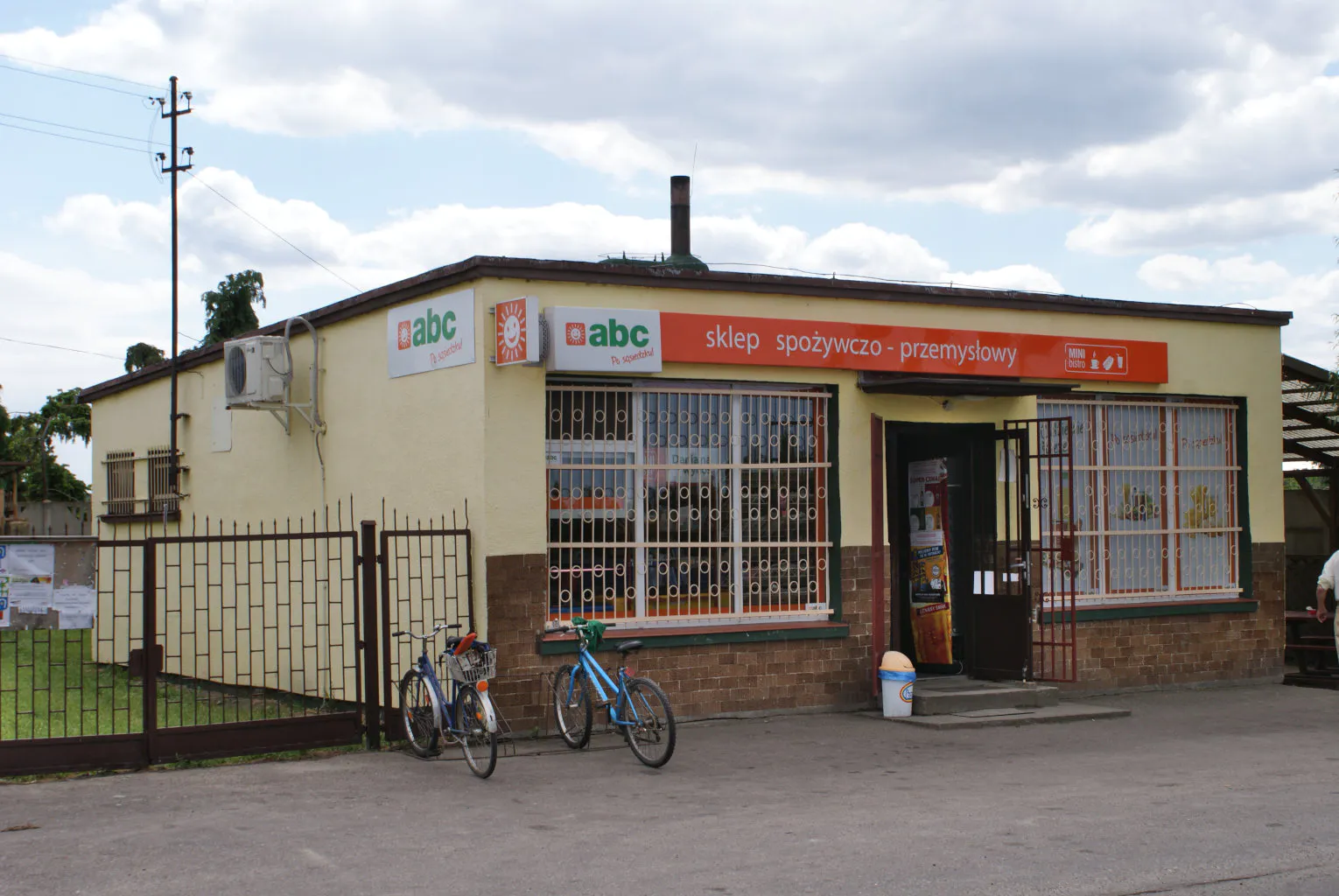
Sklep wybudowany przez Gminną Spółdzielnię w Rogoźnie w latach 70-tych, obecnie własność prywatna
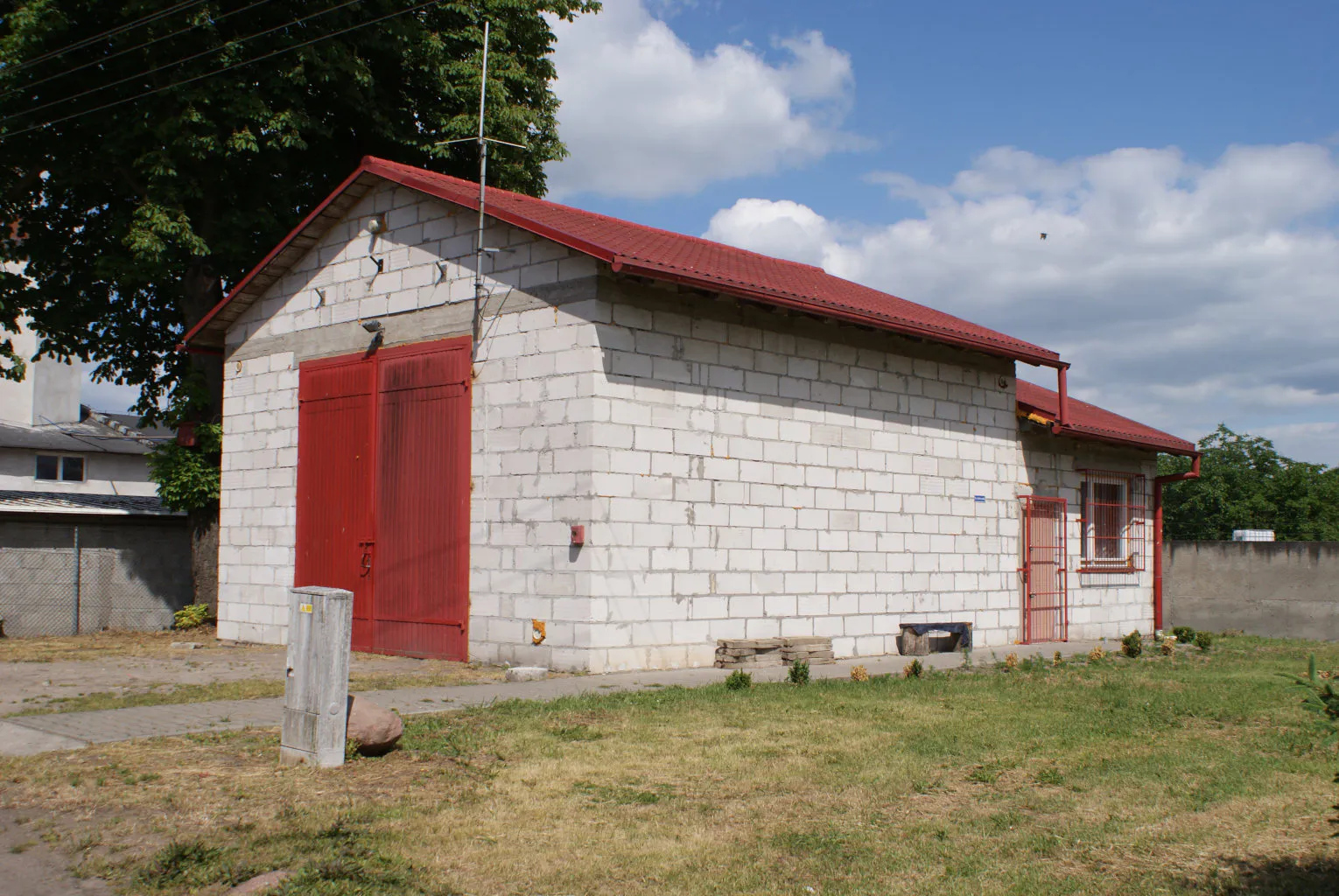
Budynek remizy strażackiej wybudowany w latach 2001 – 2003
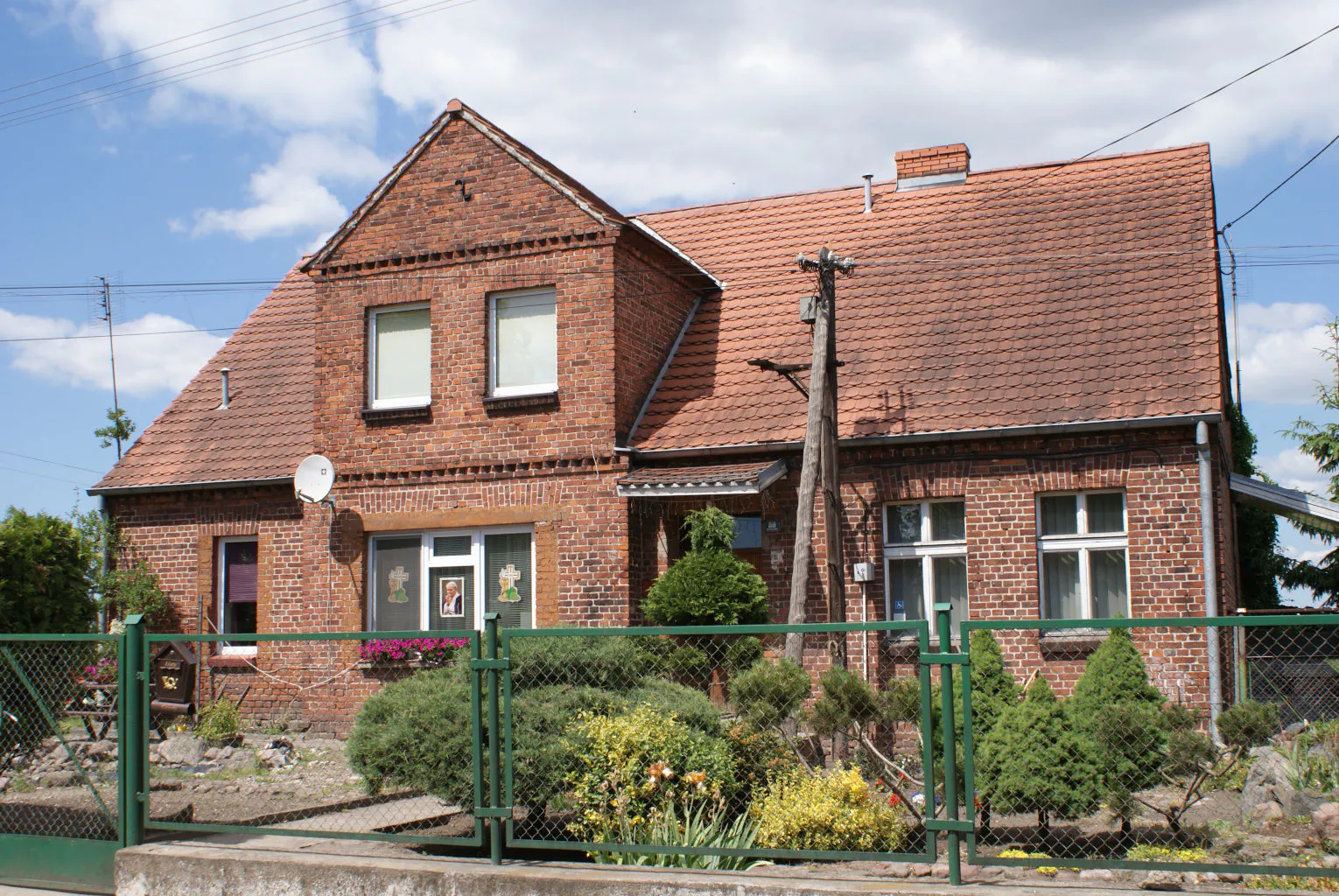
Budynek byłej poczty
Click an image to zoom
Village heads after World War II
- Waligórski
- Szymaś Feliks
- Zenger Jan
- Witkowski Joseph
- Witkowski Grzegorz - from 1984 to 1990
- Michalski Edward - from 1990 to 1994
- Zenger Mirosław - from 1994 to 1998
- Nowak Zbigniew - from 1998 to 2018
- Witt Szymon - currently since 2018
 Sołectwo Budziszewko