The school in Budziszewko – a history from the 16th century to the present day
This article presents the rich and centuries-long history of education in Budziszewko, dating back to 1515, when a parish school was established at the parish church. The text documents in detail the school's history during the interwar period, its closure during World War II, and its reconstruction since 1945. It includes detailed statistics on the number of students and teachers in each school year, describes the construction of a modern school building in 1967–1968, and describes subsequent educational reforms. The article also discusses the failed development plans for the historic palace and its eventual conversion into a residential building.
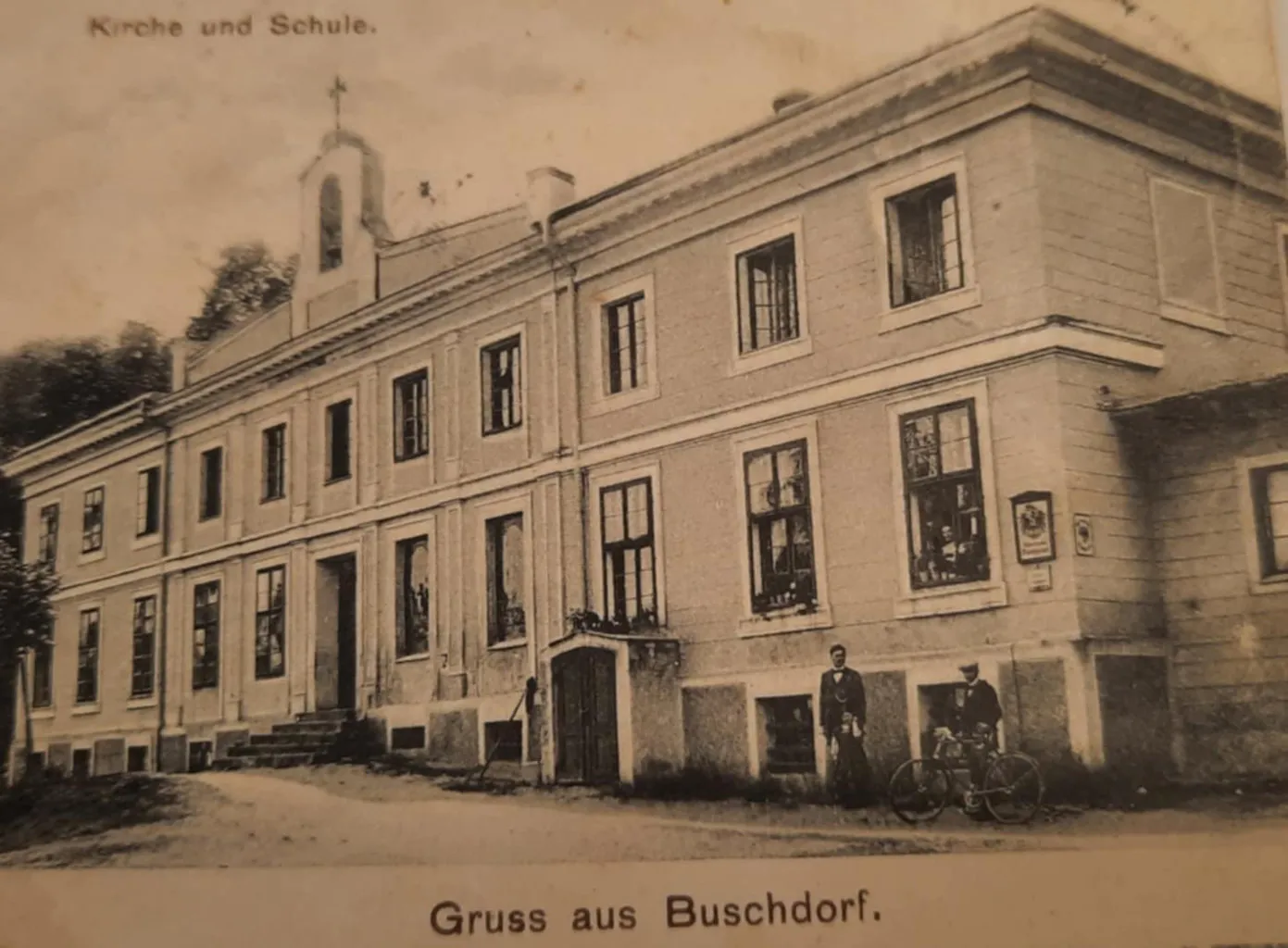
School and church, photo from 1905
School and church, photo from 1905
The establishment of the parish school and the pre-war period
Historical sources record a school established at the parish church. Its founding dates back to 1515. This can be considered and accepted as the establishment of an organized school. The school operated at the parish for quite a long time. In the Historical Description of Parish Churches from 1858, we find the following entry: "School. The school in Budziszew is mentioned by Strzałkowski's visit in 1628. The house for the rector of the school in Budziszew is being repaired, but the vicar does not support the rector himself."
During the interwar period, children of German settlers were transported to a German school in Rogoźno, while Polish children attended schools in Studzieniec and Skoki. According to information obtained from older residents of Budziszewko, a school for Polish children was established in Budziszewko in 1924 or 1925. Historical records indicate that in 1933 the palace was adapted to serve as a primary school. Two classrooms were created on the ground floor on the south side, and a teacher lived on the north side. The school was run by a single teacher – Mrs. Zygmanowska.
During World War II, the school was closed, and after the war Mrs. Zygmanowska did not return to Budziszewko (the reason remains unknown).
Reconstruction and development of the school in the post-war period (1945–1968)
Beginning in February 1945, efforts were made to organize schooling in Budziszewko in a former palace. Organizational work was led by Mr. Wojciech Jóźwiak, a teacher who had headed the school in Studzieniec before the war. Classes began on March 3, 1945. Fifty-six students of various ages were enrolled. After examinations, students were classified into the first, second, or third grades. For older students, an evening course was established on November 3, 1945, with 32 students. Classes were held in the evenings and lasted until the end of April 1946. Further classes were held in Rogoźno and concluded with an examination confirming basic education.
The 1946/47 school year began with 60 students taught by one teacher, Mr. Jóźwiak, in combined classes: Grade I – 11 students plus 12 students in grade II and 15 students in grade III plus 22 students in grade IV. The 1947/48 school year had a total of 48 students: grades I and II – 15 students, grades III and IV – 33 students.
School year 1948/49 – the school district included Budziszewko and Studzieniec. The school already had 99 students in six grades, taught by two teachers: Mr. Wojciech Jóźwiak and Mr. Stefan Kaczmarek. School year 1949/50 – a seven-grade school with 101 students was established. The school district included the towns of Budziszewko, Studzieniec, Budziszewice, and part of Potrzanów, and in later years also Nienawiszcz.
The seven-grade school lasted until 1967, when it was transformed into an eight-grade primary school. The school, with over one hundred students and seven, later eight, classes, lacked classroom space. The palace, as a school building, was not suitable for classes. Aside from two larger rooms, the rest of the rooms were very small, and classes often had over 20 students. One room was organized in the basement. From 1956, continuous efforts were made to completely renovate the palace and remodel the building's interior, or to build a new school, but these efforts were unsuccessful for a long time.
Hope emerged in 1964, when the decision was made to construct a new pavilion-type building. After two years of further efforts, another decision was made to build a new two-story school, along with a two-family building for teachers. Approval was granted for the proposed buildings to be located in the park.
In September 1967, the construction site was developed by Piła Construction Company. The area, practically the entire park, was fenced, water was brought in from the distillery (which was drawn from a deep well), and earthworks and excavations for the foundations were carried out.
On March 1, 1968, the chairman of the school's construction committee, Mr. Stanisław Pinczyński, the chairman of the parents' committee, Mr. Jan Zenger, and the school's principal, Mr. Marian Sokołowski, laid the first brick for the school. Construction progressed rapidly, and by September 9, 1968, the work was completed, with the school's official opening on October 27 of that year. The school was moved from the palace to a new building, and the palace was used as teachers' apartments. One room was later converted into a Farmers' Club.
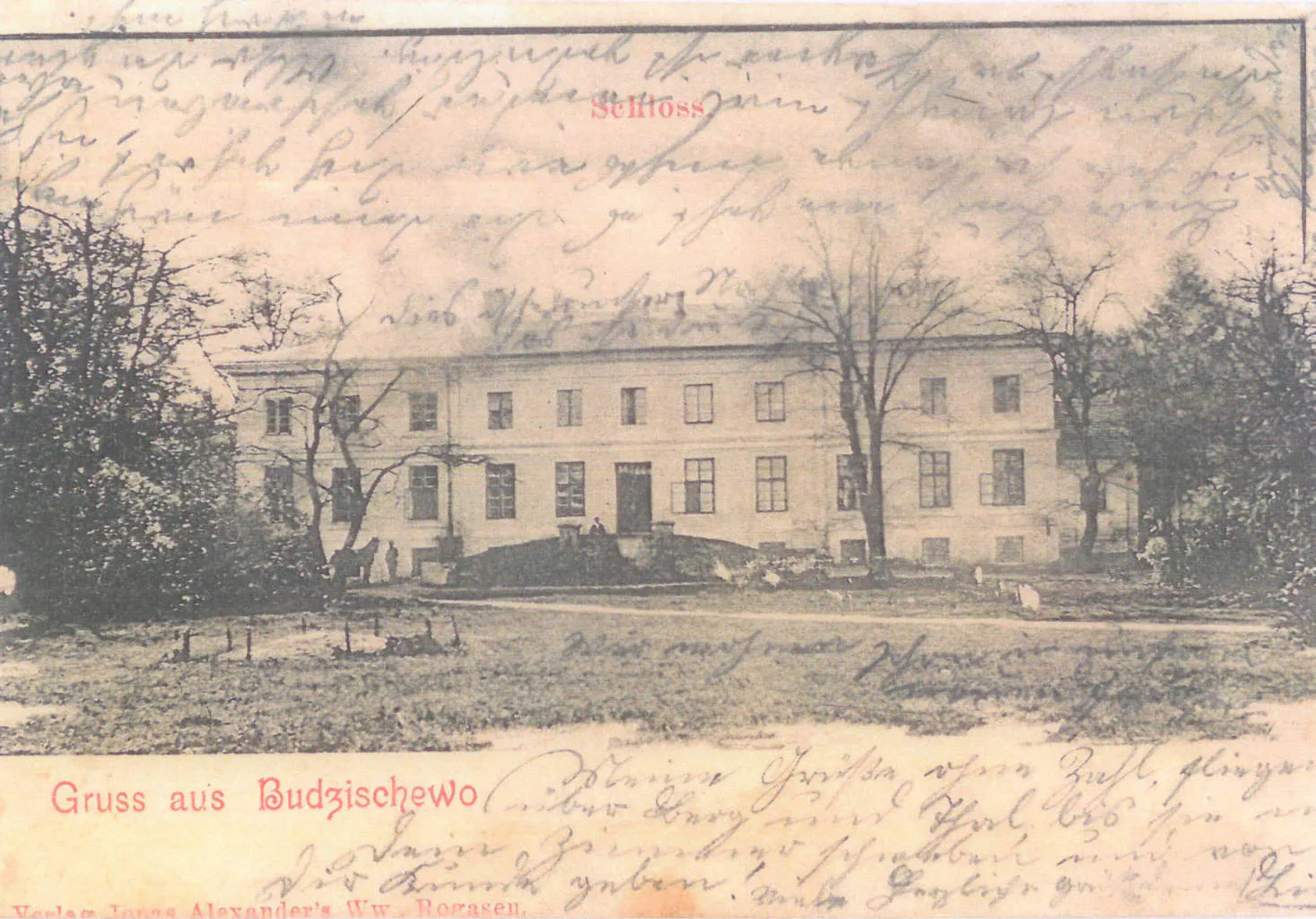
An archival photo of the palace that served as a school
An archival photo of the palace that served as a school
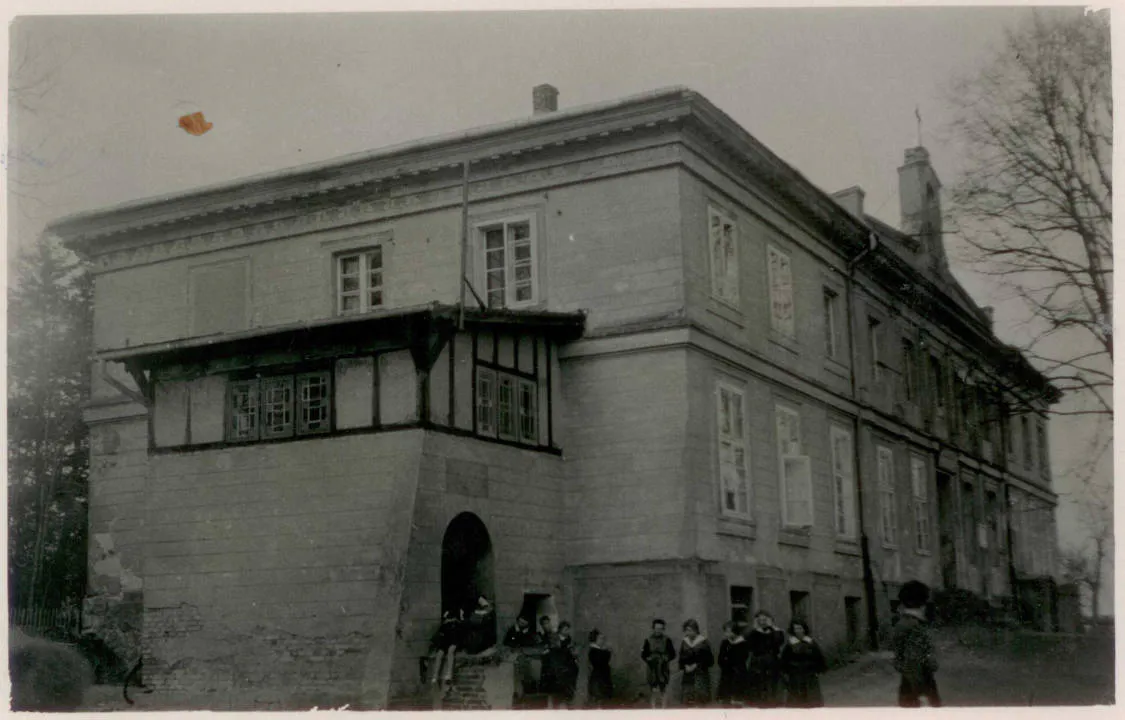
An archival photo of the palace that served as a school
An archival photo of the palace that served as a school
Eight-grade school and further changes (1968–end of the 20th century)
An eight-grade school began operating in 1967. It had 148 students.
In the 1970/71 school year, a preschool for six-year-olds was established, later transformed into a so-called preschool. In 1988/89, the "0" class was moved to Studzieniec.
On September 1, 1973, the combined classes in Studzieniec were abolished. Students in grades 3 and 4 were taken over by the school in Budziszewko. Grades 1 and 2 remained in Studzieniec, becoming branch classes of the Budziszewko Primary School.
On June 5, 1974, the school was officially named after the national poet. From that time on, the school was called the Adam Mickiewicz Primary School in Budziszewko .
On May 30, 1960, the school received a banner donated by parents.
On September 1, 1998, another education reform in Poland introduced six-year primary and middle schools. The school in Budziszewko became a six-grade school with a kindergarten.
The Palace – from a school building to a historic building
In the 1980s, a program for the palace's reconstruction and development was developed. The first floor was to house apartments for teachers, while the ground floor would house an Adam Mickiewicz Memorial Room, a village library, a reading room, rooms for practical and musical activities, and a community center—a large hall for the village's residents. Lack of funding prevented the program from being implemented, and the political changes in the country in 1989 altered economic and social policy, making it impossible to implement this noble plan.
On March 7, 1994, the palace building, outbuildings, and 4,620 m² of land were sold by the Municipality to a private individual. A thorough renovation was undertaken. Replacing the ceilings, roof, and windows prevented further deterioration and made the building habitable. These works cost a significant amount of money, and a lack of funding limited further renovations.
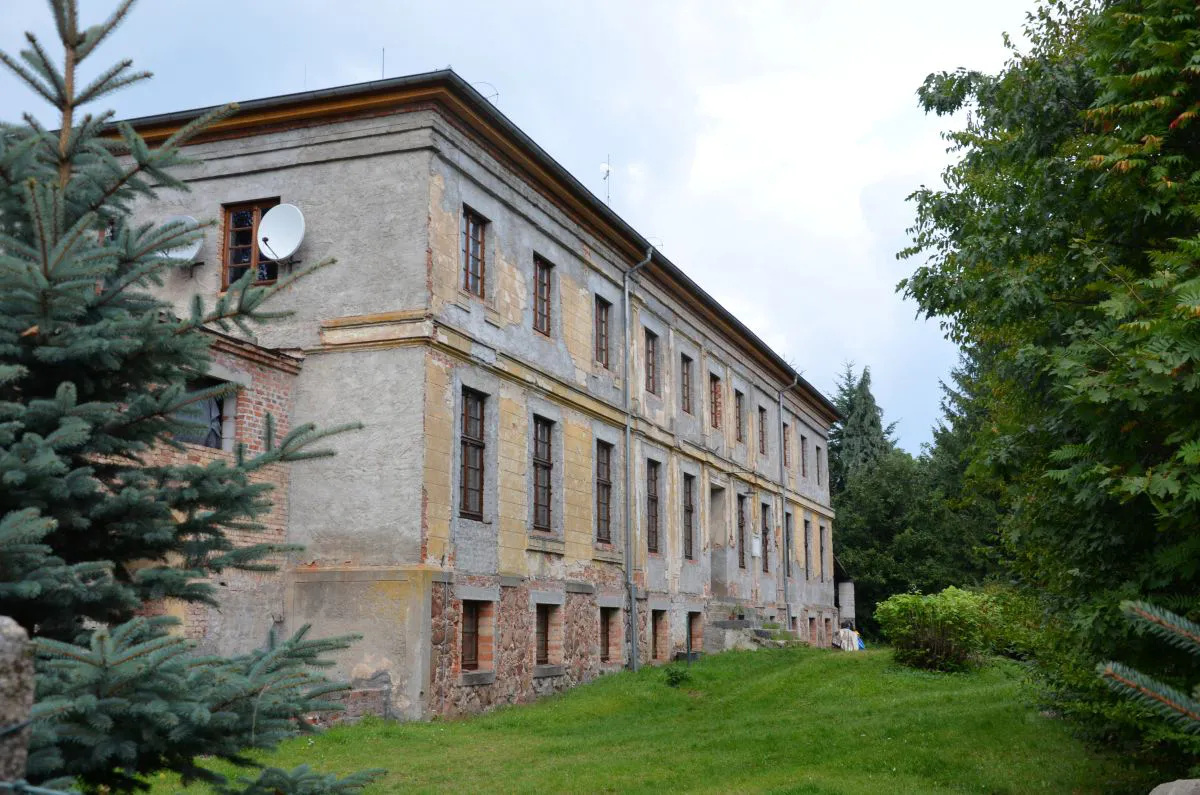
Current photo of the palace as a residential building
Current photo of the palace as a residential building
Principals of the Primary School in Budziszewko
On June 5, 1974, the school was officially named after the national poet Adam Mickiewicz. On May 30, 1980, the school received its banner. On September 1, 1998, the eight-grade school was transformed into a six-grade school. In 2019, the six-grade schools were once again transformed into eight-grade schools.
The next school principals were:
- 1930–1939 - Helena Zygmanowska
- 1945–1951 - Wojciech Jóźwiak
- 1951–1956 - Bernard Barełkowski
- 1956–1991 - Marian Sokołowski
- 1991–1996 - Janina Ruta
- 1996–2018 - Maria Frankowska
- 2018 - still - Maria Sierschuła
During the director’s longer absence, for example due to illness, the director’s duties were performed by, among others, Barbara Siwak and Mirosława Niemir.
A Note on the So-Called "Millennials"
Some sources claim that the school in Budziszewko was built as a so-called "Thousand-Year School." This is incorrect. Thousand-Year Schools were established after Władysław Gomułka announced the slogan "A Thousand Schools for the Millennium of the Polish State" in 1958. The Millennium fell in 1966. Fifty thousand-year schools were built according to one permanent design, and 1,423 schools according to other designs, depending on the needs. The school in Budziszewko is not among the "Thousand-Year Schools."
Footnotes
Szkoła parafialna
szkoła prowadzona przez parafię, finansowana z jej środków
Obwód szkolny
obszar, z którego uczniowie uczęszczali do danej szkoły
Sztandar szkoły
oficjalne wyróżnienie i symbol szkoły, szczególnie ważne w PRL-owskiej rzeczywistości
Wizyta Strzałkowskiego z 1628 roku
wizytacja kanoniczna przeprowadzona przez biskupa lub jego delegata w celu kontroli stanu parafii i szkoły
Klasy łączone
forma nauczania, w której kilka klas uczyło się jednocześnie w jednej sali pod kierunkiem jednego nauczyciela, ze względu na brak wystarczającej liczby pomieszczeń
Ognisko przedszkolne
placówka oświatowa dla przedszkolaków, stanowiąca formę przedszkolnego wychowania społecznego dla dzieci przed rozpoczęciem nauki w szkole
Klasy filialne
oddziały szkoły macierzystej, funkcjonujące w innej miejscowości, ale organizacyjnie podlegające szkole głównej
Szkoły tysiąclatki
szkoły zbudowane w Polsce jako część programu „Tysiąc szkół na tysiąc lecie Państwa Polskiego" zainicjowanego przez Władysława Gomułkę w 1958 roku z okazji zbliżającego się tysiąclecia w roku 1966
Przemiany ustrojowe w 1989 roku
zmiana ustroju politycznego w Polsce z komunizmu na demokrację, będąca konsekwencją upadku ZSRR i zaokrętowania systemu
 Sołectwo Budziszewko